Monday, 18 January 2021

Snow


Snow

1.
'Who affirms that crystals are alive?'
I affirm it, let who will deny:
Crystals are engendered, wax and thrive,
Wane and wither; I have seen them die.

Trust me, masters, crystals have their day,
Eager to attain the perfect norm,
Lit with purpose, potent to display
Facet, angle, colour, beauty, form.

2.
Water-crystals need for flower and root
Sixty clear degrees, no less, no more;
Snow, so fickle, still in this acute
Angle thinks, and learns no other lore:

Such its life, and such its pleasure is,
Such its art and traffic, such its gain,
Evermore in new conjunctions this
Admirable angle to maintain.

Crystalcraft in every flower and flake
Snow exhibits, of the welkin free:
Crystalline are crystals for the sake,
All and singular, of crystalry.

Yet does every crystal of the snow
Individualize, a seedling sown
Broadcast, but instinct with power to grow
Beautiful in beauty of its own.

Every flake with all its prongs and dints
Burns ecstatic as a new-lit star:
Men are not more diverse, finger prints
More dissimilar than snow-flakes are.

Worlds of men and snow endure, increase,
Woven of power and passion to defy
Time and travail: only races cease,
Individual men and crystals die.


3.
Jewelled shapes of snow whose feathery showers,
Fallen or falling wither at a breath,
All are afraid are they, and loth as flowers
Beasts and men tread the way to death.

Once I saw it upon an object-glass,
Martyred underneath a microscope,
One elaborate snow-flake slowly pass,
Dying hard, beyond the reach of hope.

Still from shape to shape the crystal changed,
Writhing in its agony; and still,
Less and less elaborate, arranged
Potently the angle of its will.

Tortured to a simple final form,
Angles six and six divergent beams,
Lo, in death it touched the perfect norm
Verifying all its crystal dreams!


4.
Such the noble tragedy of one
Martyred snow-flake. Who can tell the fate
Heinous and uncouth of showers undone,
Fallen in cities! -- showers that expiate

Errant lives from polar worlds adrift
Where the great millennial snows abide;
Castaways from mountain-chains that lift
Snowy summits in perennial pride;

Nomad snows, or snows in evil day
Born to urban ruin, to be tossed,
Trampled, shovelled, ploughed and swept away
Down the seething sewers: all the frost

Flowers of heaven melted up with lees,
Offal, excrement, but every flake
Showing to the last in fixed degrees
Perfect crystals for the crystal's sake.
 
5.
Usefulness of snow is but a chance
Here in temperate climes with winter sent,
Sheltering earth's prolonged hibernal trance:
All utility is accident.

Sixty clear degrees the joyful snow,
Practising economy of means,
Fashions endless beauty in, and so
Glorifies the universe with scenes

Arctic and antarctic: stainless shrouds,
Peaks in every land among the clouds
Crowned with snows to catch the morning's fire. 
 

John Davidson 


 "Lit with purpose, potent to display/Facet, angle, colour, beauty, form."
     
Is a snowflake alive? The answer seems obvious until I read this poem. When Davidson records their beginning through to their end, there are so many parallels to our individual lives, it's undeniable. And, of course, it works the opposite way too. Our lives are very much like the snowflake's. We are fragile, "wither at a breath", we too are "lit with purpose", and cringe under a microscope.
 
I also like how he describes -  "a seedling sown/Broadcast, but instinct with power to grow/Beautiful in beauty of its own." - which is the same macro/micro theme that we use when speaking of humanity and the individual. How he portrays the death of one snowflake under a microscope and moves to the masses, the blizzards of crystal-work that have passed before our eyes - "Such the noble tragedy of one/Martyred snow-flake. Who can tell the fate/Heinous and uncouth of showers undone/,Fallen in cities! -- showers that expiate/Errant lives from polar worlds adrift
Where the great millennial snows abide;/
Castaways from mountain-chains..."
So interesting. Looking at history we see the correlation. Groups of people, nations, growing, spreading "broadcast" across the land, these also hold ground for a while and then fail. 
 
Rather beautiful, if you ask me. You might say "How homo-centric!" Quite true. I'm human, and I cannot see through other-than-human-eyes. It's a limited point of view, but it doesn't lack for beauty and insight. Thinking, examining, appreciating the world around me, seeing how I am like the snow - it's not a trivial thing. It helps me endure, sometimes it enlightens. It reveals the patterns we are all a part of.
 
 
"Worlds of men and snow endure, increase,
Woven of power and passion to defy
Time and travail: only races cease,
Individual men and crystals die."



Saturday, 2 January 2021

The Republic of Motherhood


The Republic of Motherhood


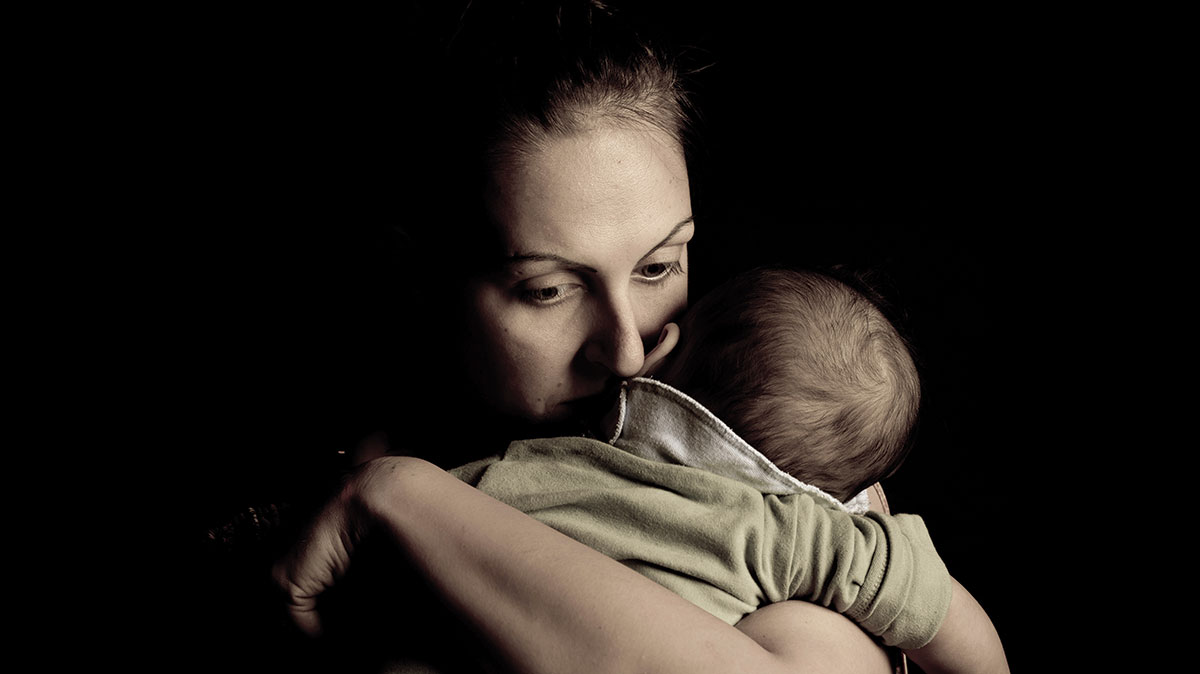
I crossed the border into the Republic of Motherhood
and found it a queendom, a wild queendom.
I handed over my clothes and took its uniform,
its dressing gown and undergarments, a cardigan
soft as a creature, smelling of birth and milk,
and I lay down in Motherhood’s bed, the bed I had made
but could not sleep in, for I was called at once to work
in the factory of Motherhood. The owl shift,
the graveyard shift. Feedingcleaninglovingfeeding.
I walked home, heartsore, through pale streets,
the coins of Motherhood singing in my pockets.
Then I soaked my spindled bones
in the chill municipal baths of Motherhood,
watching strands of my hair float from my fingers.
Each day I pushed my pram through freeze and blossom
down the wide boulevards of Motherhood
where poplars bent their branches to stroke my brow.
I stood with my sisters in the queues of Motherhood—
the weighing clinic, the supermarket—waiting
for Motherhood’s bureaucracies to open their doors.
As required, I stood beneath the flag of Motherhood
and opened my mouth although I did not know the anthem.
When darkness fell I pushed my pram home again,
and by lamplight wrote urgent letters of complaint
to the Department of Motherhood but received no response.
I grew sick and was healed in the hospitals of Motherhood
with their long-closed isolation wards
and narrow beds watched over by a fat moon.
The doctors were slender and efficient
and when I was well they gave me my pram again
so I could stare at the daffodils in the parks of Motherhood
while winds pierced my breasts like silver arrows.
In snowfall, I haunted Motherhood’s cemeteries,
the sweet fallen beneath my feet—
Our Lady of the Birth Trauma, Our Lady of Psychosis.
I wanted to speak to them, tell them I understood,
but the words came out scrambled, so I knelt instead
and prayed in the chapel of Motherhood, prayed
for that whole wild fucking queendom,
its sorrow, its unbearable skinless beauty,
and all the souls that were in it. I prayed and prayed
until my voice was a nightcry
and sunlight pixelated my face like a kaleidoscope.


Liz Berry


Thank you to the friend who introduced me to this poem a few weeks back. I have been reading it every day or so since, mulling it over, trying to understand what makes it so electric and familiar (a little like my own skin), what it is that grips me in it and why. That image of Motherhood as a Republic! Not a season, or a physical state or a quality, but a Republic.  A place with rules, laws, norms (even a uniform), with its own flag and currency, industries and bureaucracies, its swimming pools and boulevards. 

What catches me off-guard is how it describes a place you "cross over into the borders of", an unfamiliar country where one stumbles along, trying desperately to learn the language and the customs, trying to fit in and do everything properly, but really finding oneself lost and isolated in a rather rigidly ordered new world, going through the expected motions - "As required, I stood beneath the flag of Motherhood/ and opened my mouth although I did not know the anthem." The first time I read that line I thought, "My gosh, that's exactly what it's like!"  I mean, we could talk all day about Motherhood - speaking of the child or the nurturing instinct or Nature or a dozen other aspects, but for someone to finally address the utter alienness of the crossing into this "queendom" - I haven't seen it done, not like this, not so beautifully. 


It's a place I recognized immediately - perhaps not all mothers will, but wow - for those millions of us who do, what a relief to hear the truth of our experience spoken out loud.


Speaking of "out loud", Liz Berry's performance of her poem is something special. You can find it here.


Thursday, 24 December 2020

Three Kings Came Riding


Edward Burne-Jones


Three Kings Came Riding

Three Kings came riding from far away,
  Melchior and Gaspar and Baltasar;
Three Wise Men out of the East were they,
And they travelled by night and they slept by day,
  For their guide was a beautiful, wonderful star.

The star was so beautiful, large, and clear,
  That all the other stars of the sky
Became a white mist in the atmosphere,
And by this they knew that the coming was near
  Of the Prince foretold in the prophecy.

Three caskets they bore on their saddle-bows,
  Three caskets of gold with golden keys;
Their robes were of crimson silk with rows
Of bells and pomegranates and furbelows,
  Their turbans like blossoming almond-trees.

And so the Three Kings rode into the West,
  Through the dusk of night, over hill and dell,
And sometimes they nodded with beard on breast
And sometimes talked, as they paused to rest,
  With the people they met at some wayside well.

"Of the child that is born," said Baltasar,
  "Good people, I pray you, tell us the news;
For we in the East have seen his star,
And have ridden fast, and have ridden far,
  To find and worship the King of the Jews."

And the people answered, "You ask in vain;
  We know of no king but Herod the Great!"
They thought the Wise Men were men insane,
As they spurred their horses across the plain,
  Like riders in haste, and who cannot wait.

And when they came to Jerusalem,
  Herod the Great, who had heard this thing,
Sent for the Wise Men and questioned them;
And said, "Go down unto Bethlehem,
  And bring me tidings of this new king."

So they rode away; and the star stood still,
  The only one in the gray of morn
Yes, it stopped, it stood still of its own free will,
Right over Bethlehem on the hill,
  The city of David, where Christ was born.

And the Three Kings rode through the gate and the guard,
  Through the silent street, till their horses turned
And neighed as they entered the great inn-yard;
But the windows were closed, and the doors were barred,
  And only a light in the stable burned.

And cradled there in the scented hay,
  In the air made sweet by the breath of kine,
The little child in the manger lay,
The child, that would be king one day
  Of a kingdom not human but divine.

His mother Mary of Nazareth
  Sat watching beside his place of rest,
Watching the even flow of his breath,
For the joy of life and the terror of death
  Were mingled together in her breast.

They laid their offerings at his feet:
  The gold was their tribute to a King,
The frankincense, with its odor sweet,
Was for the Priest, the Paraclete,
  The myrrh for the body's burying.

And the mother wondered and bowed her head,
  And sat as still as a statue of stone;
Her heart was troubled yet comforted,
Remembering what the Angel had said
  Of an endless reign and of David's throne.

Then the Kings rode out of the city gate,
  With a clatter of hoofs in proud array;
But they went not back to Herod the Great,
For they knew his malice and feared his hate,
  And returned to their homes by another way.

Henry Wordsworth Longfellow 


Saturday, 19 December 2020

Emmonsail's Heath in Winter


                                                                        Denise Coble


Emmonsail's Heath in Winter


I love to see the old heath's withered brake
Mingle its crimpled leaves with furze and ling,
While the old heron from the lonely lake
Starts slow and flaps its melancholy wing,
An oddling crow in idle motion swing
On the half-rotten ash-tree's topmost twig,
Beside whose trunk the gypsy makes his bed.
Up flies the bouncing woodcock from the brig
Where a black quagmire quakes beneath the tread;
The fieldfares chatter in the whistling thorn
And for the haw round fields and closen rove,
And coy bumbarrels, twenty in a drove,
Flit down the hedgerows in the frozen plain
And hang on little twigs and start again.


John Clare 


 Clare is such a treat for word-lovers. He works beyond mere description and sense to give us something I can only think to call texture. Every word in this poem jumps and jostles against the others, is alive with meaning and sound - very like birds on a branch. He makes it look easy, but my gosh, it is not. He is nothing short of a master. Very few people can write an excellent poem, even fewer can write a poem that flies off the page. 
 
Heath: a broad area of level or rolling treeless country
Brake: rough or marshy land overgrown usually with one kind of plant
Furze: gorse, a bushy plant
Ling: heather
Brig: bridge
Quagmire: marsh
Haw = hawthorn or fruit of the hawthorn
Closen rove: an enclosed field?
Bumbarrel: a longtailed tit
Drove: a flock


Sunday, 29 November 2020

Brr, Footrest


Matthew Brady


Brr, Footrest

(Robert Frost)


This ottoman is in my way.

I tripped on it again today;

It chills me with a nameless fear

To think it sees me as its prey.


My loving wife must think it queer

That I am always falling here

As I am walking past the chair.

How comical I must appear.


When I remember to beware

The wicked footrest lurking there,

I do not stumble in a sprawl,

And yet such instances are rare.


My house is cozy, warm , and small,

With just one thing that wrecks it all:

The ottoman that makes me fall,

The ottoman that makes me fall.


Francis Heany


 (Sometimes I just can't find the image I want to match the poem. This one will have to do for now.) My last post made me think of "Stopping By Woods On a Snowy Evening" by Frost, which in turn made me think of this poem - a wonderful imitation/parody of that poem. It cracks me up. There are some excellent parodies out there, I should include more.


Wednesday, 25 November 2020

November


Ernest W. Watson


November


The hills and leafless forests slowly yield
To the thick-driving snow. A little while
And night shall darken down. In shouting file
The woodmen's carts go by me homeward-wheeled,
Past the thin fading stubbles, half concealed,
Now golden-grey, sowed softly through with snow,
Where the last ploughman follows still his row,
Turning black furrows through the whitening field.

Far off the village lamps begin to gleam,
Fast drives the snow, and no man comes this way;
The hills grow wintery white, and bleak winds moan
About the naked uplands. I alone
Am neither sad, nor shelterless, nor grey,
Wrapped round with thought, content to watch and dream.


Archibald Lampman

 
Word by word, line by line, Lampman builds the scene. Layer on layer, his description of the  sights and sounds accumulate to create a moment so real it feels like I could step right in. 

"Far off the village lamps begin to gleam,
Fast drives the snow, and no man comes this way..."
 
Each poet has their strong points, and Lampman is wonderful with drawing the reader right into the scene. If I were going to choose desert island poetry, I would take Lampman - round about noon a poem like this would cool me right down. This particular poem has a lovely slow rhythm I find mesmerizing, a little like Robert Frost's "Stopping By Woods On a Snowy Evening". The mood is similar. Maybe it's a snowfall effect, lulling and drowsy.

"I alone
Am neither sad, nor shelterless, nor grey,
Wrapped round with thought, content to watch and dream."


Saturday, 7 November 2020

Shadows

Linda Bennett


Shadows

And if tonight my soul may find her peace
in sleep, and sink in good oblivion,
and in the morning wake like a new-opened flower
then I have been dipped again in God, and new-created.

And if, as weeks go round, in the dark of the moon
my spirit darkens and goes out, and soft strange gloom
pervades my movements and my thoughts and words
then I shall know that I am walking still
with God, we are close together now the moon’s in shadow.

And if, as autumn deepens and darkens
I feel the pain of falling leaves, and stems that break in storms
and trouble and dissolution and distress
and then the softness of deep shadows folding,
folding around my soul and spirit, around my lips
so sweet, like a swoon, or more like the drowse of a low, sad song
singing darker than the nightingale, on, on to the solstice
and the silence of short days, the silence of the year, the shadow,
then I shall know that my life is moving still
with the dark earth, and drenched
with the deep oblivion of earth’s lapse and renewal.

And if, in the changing phases of man’s life
I fall in sickness and in misery
my wrists seem broken and my heart seems dead
and strength is gone, and my life
is only the leavings of a life:

and still, among it all, snatches of lovely oblivion, and snatches of renewal
odd, wintry flowers upon the withered stem, yet new, strange flowers
such as my life has not brought forth before, new blossoms of me

then I must know that still
I am in the hands of the unknown God,
he is breaking me down to his own oblivion
to send me forth on a new morning, a new man.


D.H. Lawrence


 "...then I shall know that I am walking still/ with God we are close together now.."


There are so many distractions and stresses, there always have been - coming in from in so many directions. These days I look for the constants, the things that don't change. I find so much comfort there. Like the speaker in this poem, I go to sleep at night committing my existence into the hands of the God I trust with everything. The God who remains Himself no matter what dark cloud I find myself under, no matter what I don't know and can't control. The God who knows me fully and loves me entirely and who is able (and willing) to re-create me, transform me, lift me up beyond cloud or circumstance. The God with whom all good things are possible. "

"New blossoms of me." for instance, 

"strange flowers such as my life has not brought forth before."